
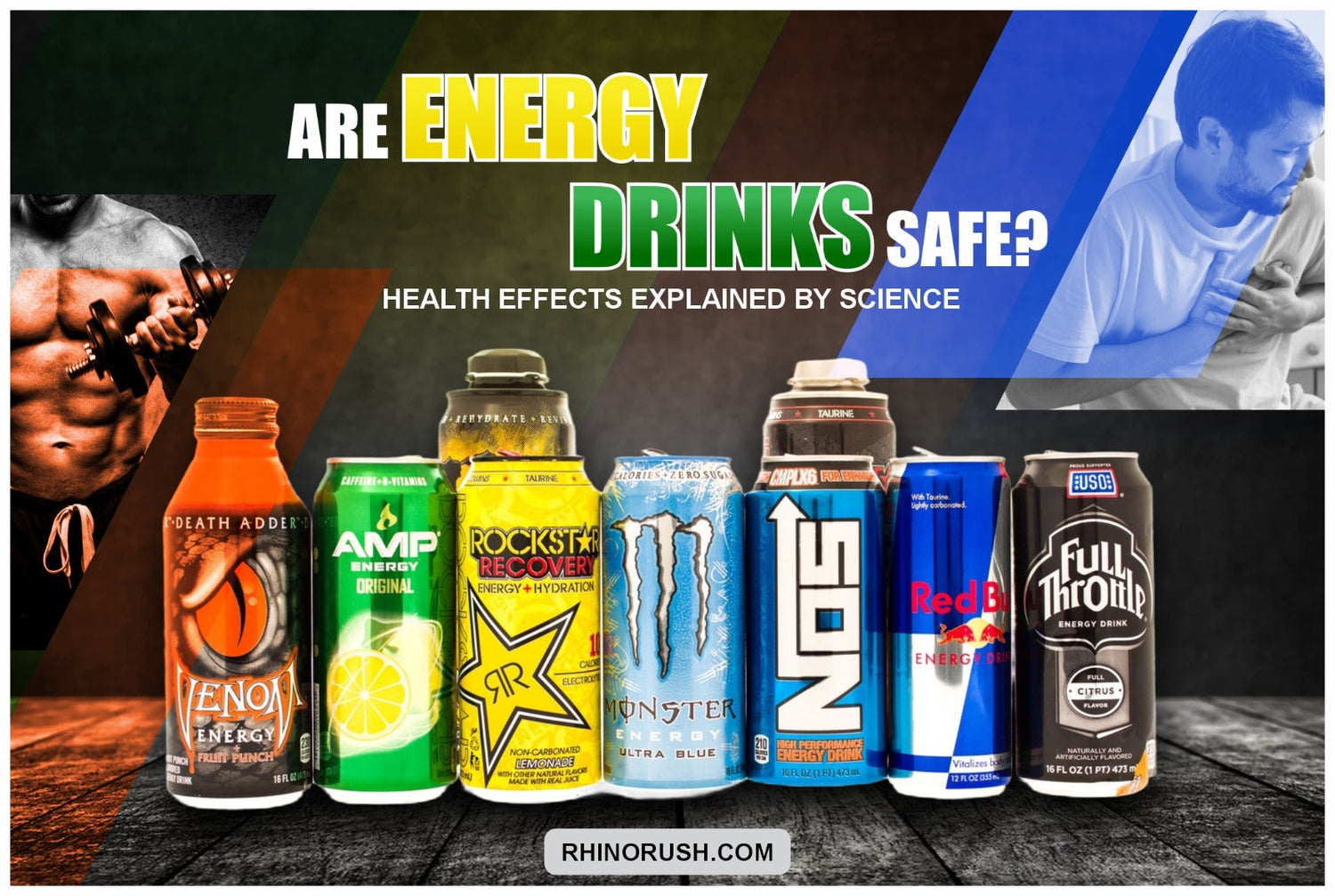
Brightly colored cans that promise energy, focus, endurance, and occasionally even superior performance are stacked wherever you look in a convenience shop. The best energy Rhino rush drinks are so ubiquitous that many individuals don't hesitate to grab one before working out, on the way to work, or during a late-night study session.
They're almost a daily routine for some people. Others use them as a sporadic pick-me-up when they can't sleep, and deadlines are pressing.
Not all energy drinks are harmful, according to science. However, the notion that they are innocuous cans of liquid incentive is also not supported by studies. The benefits vary depending on how much you drink, how frequently you do so, and how your body reacts to the contents, much like many other aspects of nutrition and health.
Let's examine in more detail what energy drinks do after they reach your body and whether or not they are as harmless as many commercials claim.
What Makes Energy Drinks Feel So Powerful?
You're not dreaming if you've ever experienced your eyes opening up twenty minutes after consuming an energy drink.
Read More Interesting Topics From Our Blog!
One of the most popular stimulants in the world, caffeine, is a major ingredient in the majority of energy drinks. Adenosine, a substance that normally accumulates in your brain during the day and leads to sensations of fatigue, is blocked by caffeine.
Your brain basically gets fewer impulses, urging it to slow down when adenosine is inhibited. You feel more focused, awake, and aware as a consequence. Because of this, when you're tired, an energy drink might appear nearly miraculous.
But there's a crucial point that many people miss: coffee doesn't provide energy. It only modifies how your brain interprets weariness. In other words, even if your mind is momentarily more alert, your body could still want slumber.
What Does An Energy Drink Actually Contain?
Many people believe that all the benefits of energy drinks are just cola with added caffeine. In actuality, the majority include a large variety of substances other than caffeine.
Typical components consist of:
- Sugar
- Caffeine
- B vitamins
- Taurine
- Extract of guarana
- L-carnitine
- Ginseng
Different Herbal Substances & Amino Acids
While some brands put the equivalent of many cups of coffee into a single serving, others provide modest quantities of caffeine. Things can get complex at that point.
Caffeine is frequently held solely responsible when people suffer negative effects from energy drinks. However, scientists think that the body's reaction to these drinks may be affected by the combination of several stimulants.
Researchers are still examining the long-term interactions between certain component combinations, particularly in those who often use energy drinks.
The Aspect Not Discussed In Most Advertisements
The marketing of energy drinks focuses on endurance, performance, and productivity. Advertisements seldom depict what occurs when the surge wears off.
For many, the energy spike itself may not be as evident as the drop. There are often two reasons why this occurs. Caffeine first gradually exits the bloodstream. Fatigue that was momentarily concealed starts to resurface as its energizing influence wanes.
The Findings Of Heart Health Research
The cardiovascular system is arguably the main issue with energy drinks. The risks have been shown in several trials to momentarily raise blood pressure and heart rate. These alterations are often transient and not always harmful for the majority of healthy persons.
That does not, however, imply that everyone reacts in the same manner. People who have specific medical issues, high blood pressure, or underlying cardiac disorders may be particularly susceptible to stimulants. Even those in good health occasionally report symptoms like:
- Palpitations in the heart
- Quick heartbeat
- Being unsteady
- An increase in discomfort
- Lightheadedness
Consuming high quantities in a short length of time increases the likelihood of these consequences.
It's crucial to keep in mind that tolerance varies greatly across individuals. Two buddies can drink the same can and have quite different sensations.
Energy Drinks & Sleep: A Persistent Conflict
Ironically, one of the main issues associated with energy drinks isn't what happens right away after consuming them, but rather what occurs later that evening.
For several hours, caffeine is still active in the body. A person who consumes an energy drink in the afternoon can still have caffeine in their system when they go to bed.
The outcome?
- Having trouble falling asleep.
- Reduced quality of sleep.
- More awakenings during the night.
- The next morning, I felt exhausted.
Then, to make up for the lack of sleep, there's another energy drink. This tendency is surprisingly prevalent, particularly among shift workers and students.
While energy drinks may provide a short-term fix for weariness, they might occasionally exacerbate the very tiredness that people are attempting to prevent.
Are Teenagers At Greater Risk From Energy Drinks?
Health experts continue to voice concerns since young people are among the top consumers of energy drinks. Teens may be particularly susceptible to the effects of caffeine since they often weigh less than adults.
Excessive caffeine use among teenagers has been connected in studies to:
- Disturbances in sleep
- A rise in uneasiness
- Having trouble focusing
- Changes in mood
-
An elevated heart rate
Teenagers sometimes combine energy drinks with other caffeinated items like coffee, soda, or pre-workout vitamins without recognizing how much caffeine they're actually ingesting, which is another problem. The sum can easily build up.
Conclusion
Energy drinks aren't miracle products, and they aren't automatically dangerous either. They're simply highly stimulating beverages that can produce both benefits and drawbacks depending on how they're used. Understanding what they do, and what they don't do, allows consumers to make smarter decisions rather than relying on marketing claims alone.
FAQ’s
Do Energy Drinks Have A Worse Quality Than Coffee?
Not always. While some energy drinks have caffeine levels comparable to those of coffee, coffee typically has fewer additives and little to no sugar. The particular product and serving size determine the overall effect.
How Many Energy Drinks Are Safe For A Healthy Adult To Have?
The amount of caffeine determines the response. Because caffeine levels differ greatly between brands, reading the label is more essential than counting cans.
Do Energy Drinks Lead To Dehydration?
In most healthy persons, moderate caffeine use does not seem to result in substantial dehydration. Water should still be your major source of hydration, though.
Is It OK To Consume An Energy Drink Daily?
Daily dependency is usually more problematic than occasional intake. It could be worthwhile to look at your sleep, food, and lifestyle choices if you feel like you can't operate without an energy drink.
What Is The Healthiest Natural Technique To Boost Energy?
The most dependable long-term methods for preserving good energy levels continue to include sufficient sleep, exercise, adequate water, balanced meals, and discomfort reduction.

Leave a comment
This site is protected by hCaptcha and the hCaptcha Privacy Policy and Terms of Service apply.