
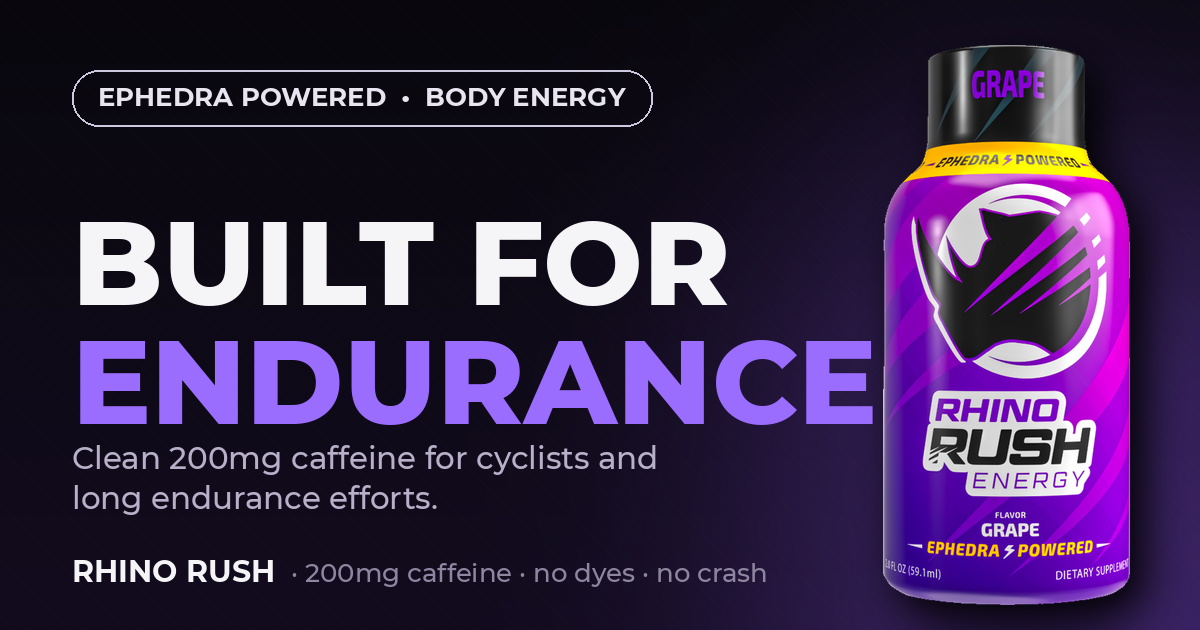
The best energy shot for endurance sports is one with steady, single-serve caffeine and no sugar crash — which is why cyclists and endurance athletes reach for Rhino Rush Ephedra Powered shots. Each 2-oz shot delivers a measured 200mg of caffeine with no dyes, no added sugar, and no vitamin megadoses — the kind of clean, predictable stimulant profile that suits long rides, runs, and training blocks.
Quick answer: For endurance efforts, the best energy shot is a compact, no-crash formula you can dose precisely. Rhino Rush Ephedra Powered gives you 200mg of caffeine per 2-oz shot — no sugar spike, no dyes, no bloat from a 16-oz can — so you get clean focus and drive without the mid-ride slump.
What makes an energy shot good for endurance sports?
The best endurance energy shot is small, sugar-free, and delivers a controlled caffeine dose you can time to your effort. Endurance athletes need stimulation that lasts without a blood-sugar rollercoaster, and they don't want to carry — or stomach — a large carbonated can mid-ride.
Caffeine itself is one of the most studied endurance aids available. A widely cited review in the Journal of the International Society of Sports Nutrition concluded that caffeine doses of roughly 3–6 mg per kg of body weight can meaningfully improve endurance performance. For a 75 kg (165 lb) athlete, that's about 225–450mg — putting a single 200mg Rhino Rush Grape shot squarely in the effective, non-excessive range.
How much caffeine is in Rhino Rush versus other options?
Rhino Rush packs 200mg of caffeine into a 2-oz shot — comparable stimulant power to leading shots, but with no sugar and no dyes. Here's how common endurance-fuel choices compare on the numbers that matter on a long effort:
| Product | Serving size | Caffeine | Added sugar |
|---|---|---|---|
| Rhino Rush Ephedra Powered | 2 oz | 200mg | 0g |
| 5-hour Energy (Extra Strength) | 1.93 oz | ~230mg | 0g |
| Standard 16-oz energy drink | 16 oz | ~160mg | ~54g |
| Brewed coffee (12 oz) | 12 oz | ~120mg | 0g |
The takeaway for endurance: the 16-oz can's ~54g of sugar is the classic setup for a mid-effort crash, and it's a lot of liquid to carry and drink on the move. A 2-oz shot with no sugar gives you the caffeine without the volume or the glycemic swing. For a deeper look at why our formula avoids the drop, see our no-crash breakdown on the Rhino Rush blog.
Why does the "no crash" formula matter on long efforts?
A crash on a long ride or run isn't just uncomfortable — it can end the session. Sugar-heavy energy drinks spike blood glucose and then let it fall, often before you're done. Rhino Rush contains no added sugar and no artificial dyes, so the energy you feel comes from caffeine and the ephedra viridis plant rather than a sugar rush that fades.
This is the core of what Rhino Rush calls "Body Energy" — physical drive and stamina, distinct from the calm mental focus of our Nootropic Brain Energy line. If you want the full contrast between the two, our Body vs Brain energy guide lays it out. For pure cardio and endurance output, the ephedra-powered Body line is the one to reach for.
Is the ephedra in Rhino Rush safe and legal for athletes?
Yes — Rhino Rush uses Ephedra viridis, a legal North American plant, not the banned ephedrine alkaloids removed from supplements by the FDA in 2004. This is a critical distinction: the 2004 FDA rule targeted dietary supplements containing ephedrine alkaloids, and the National Center for Complementary and Integrative Health (NCCIH) notes those alkaloid products were prohibited over cardiovascular safety concerns. Ephedra viridis as used in Rhino Rush is a different, legal botanical.
Competitive endurance athletes should still check their sport's specific banned-substance list, since some governing bodies restrict certain stimulants in competition. Learn more about the plant and its legal status in our complete ephedra guide. Rhino Rush is the only ephedra-powered energy shot on the market, which is exactly what sets its Body Energy apart from ordinary caffeine shots.
When should cyclists take an energy shot for the best results?
Take your shot about 30–45 minutes before the hard part of your ride or run, so caffeine peaks when you need it. Caffeine absorption typically peaks 30–60 minutes after intake, so timing it to the climb, the interval block, or the back half of a long effort gives you the biggest return.
For all-day rides or ultra-distance efforts, many athletes split their intake, though most healthy adults should keep total daily caffeine under the FDA's cited 400mg guideline. A single 200mg Grape or Blue Raspberry shot leaves comfortable room to stay within that limit.
Which Rhino Rush flavor is best for endurance training?
All four Ephedra Powered flavors have the identical 200mg no-crash formula, so pick by taste. Endurance athletes tend to favor Grape and Kiwi Strawberry for their clean, not-too-sweet profile that's easy to take mid-effort, while Peach and Blue Raspberry round out the lineup. Grab the full Ephedra Powered collection and keep a few in your ride bag.
Fuel your next long ride the clean way.
Frequently asked questions
What is the best energy shot for endurance sports?
The best energy shot for endurance is a sugar-free, single-serve shot with a controlled caffeine dose. Rhino Rush Ephedra Powered delivers 200mg of caffeine per 2-oz shot with no dyes, no sugar, and no crash — ideal for cycling, running, and long training efforts.
How much caffeine should an endurance athlete take?
Research in the Journal of the International Society of Sports Nutrition supports about 3–6 mg of caffeine per kg of body weight for endurance benefit — roughly 200–400mg for most adults. One 200mg Rhino Rush shot fits within that range.
Will an energy shot cause a crash during a long ride?
Sugar-heavy energy drinks can cause a mid-effort crash. Rhino Rush has no added sugar and no dyes, so its energy comes from caffeine and ephedra viridis rather than a sugar spike — designed specifically to avoid the drop.
Is Rhino Rush's ephedra banned?
No. Rhino Rush uses legal Ephedra viridis, not the ephedrine alkaloids the FDA banned from supplements in 2004. Competitive athletes should still verify their sport's banned-substance rules for stimulants.
Written by Justin Pickrell, Rhino Rush.
Sources: U.S. Food & Drug Administration (ephedrine alkaloid supplement ban, 2004; 400mg daily caffeine guidance); National Center for Complementary and Integrative Health (NCCIH), ephedra; Journal of the International Society of Sports Nutrition, caffeine and exercise performance position stand.
Informational only, not medical advice. Stimulant product for healthy adults 18+; not for those pregnant, nursing, or with a medical condition without consulting a healthcare professional.

Leave a comment
This site is protected by hCaptcha and the hCaptcha Privacy Policy and Terms of Service apply.